New Delhi
February 2, 2026
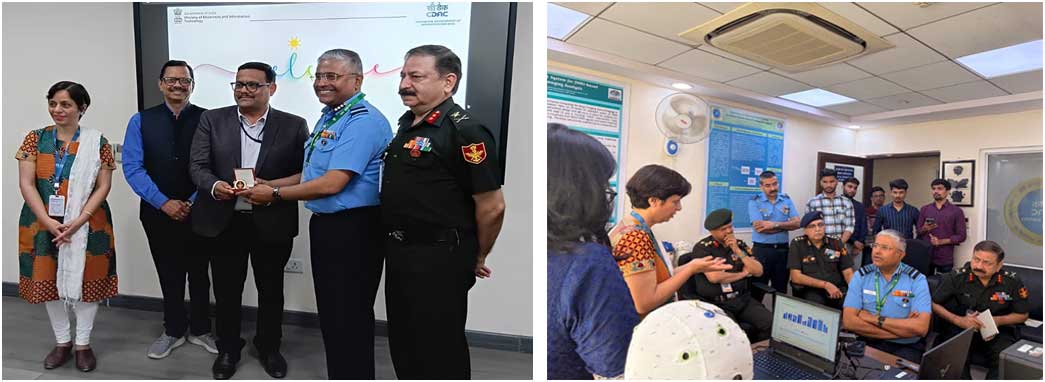
C-DAC Delhi hosted a high-level delegation from the Integrated Defence Staff (IDS) on March 2nd, 2026, marking a significant step towards strengthening collaboration in the field of artificial intelligence and emerging defence technologies.
The visiting delegation was led by Air Marshal Shankar Subramanian, Deputy Chief of Integrated Defence Staff (Medical). The delegation also included Major General P. K. Sharma, Assistant Chief of Integrated Defence Staff (Medical); Brigadier Sanjeev Kumar, SM, Deputy Assistant Chief of Integrated Defence Staff (Medical); Colonel Rishi Raj (Medical); and Wing Commander Rahul Sahni, Staff Officer to the Deputy Chief of Integrated Defence Staff.
The delegation was warmly received by senior officials of C-DAC Delhi, including Shri Jitendra Singh, Scientist G and Centre Head; Shri Arvind Kumar, Senior Advisor; and Dr. Priyanka Jain, Scientist F and Group Head. The visit began with a ceremonial welcome, followed by the presentation of mementos to the distinguished guests
In his opening remarks, Shri Jitendra Singh highlighted C-DAC’s ongoing initiatives and outreach activities in advanced computing and emerging technologies. Shri Arvind Kumar subsequently set the stage for technical deliberations by outlining the scope for collaboration between C-DAC and defence institutions.
Dr. Priyanka Jain initiated the technical discussions by presenting C-DAC’s work in neurocomputing and brain–computer interface technologies in the healthcare domain. She elaborated on ongoing research activities and the potential applications of these technologies in defence and medical ecosystems.
During the visit, Air Marshal Shankar Subramanian delivered a special address underscoring the growing strategic importance of artificial intelligence and neurotechnology in modern defence operations. This was followed by an interactive discussion session, where the IDS delegation engaged with C-DAC scientists on current initiatives and explored opportunities for future collaboration.
The discussions focused on several advanced technology areas, including AI-enabled neurotechnology platforms, brain–computer interfaces for cognitive enhancement, and behavioural profiling applications relevant to defence operations.
The delegation also visited C-DAC Delhi’s High-Performance Computing facility, where they were briefed on advanced computational capabilities supporting research and national missions. The visit included live demonstrations of the VIVAN Brain–Computer Interface (BCI) technology and the HTI web application, showcasing C-DAC’s innovations in human–technology interaction.
The visit concluded with a vote of thanks acknowledging the delegation’s valuable insights and their commitment to advancing national technological capabilities. The engagement laid a strong foundation for future cooperation between C-DAC and the Integrated Defence Staff in the areas of artificial intelligence, neurotechnology, and defence innovation.